How Cantilever Stairs Are Built and Why They Are Not the Same as Floating Stairs
Walk into a high-end London townhouse and there is a fair chance the staircase will not look like a staircase at all. It will look like a row of treads pinned to the wall, hanging in space, with nothing visibly holding them up. That is, in most cases, a cantilever staircase, and over the last decade it has quietly become one of the most requested features in bespoke UK home design.

Here is where things get confusing. Half the industry, including a fair share of our own clients, uses “cantilever” and “floating” interchangeably. They are related, but they are not the same thing, and the difference matters the moment you start planning the build. In this article we will unpack what a cantilever staircase actually is, how it differs from a floating one, how we build them at V.PSTAIRS, and which material combinations tend to hold up best over time!

What is Cantilever Staircase?

So, let’s start with basics! A cantilever staircase is a structure where each tread is anchored at one end only, usually deep inside a structural wall. No stringer underneath, no posts, no visible bracket! The wall does all the work. Where the confusion creeps in is around the word floating. This is a visual category (not an engineering solution). A staircase can look like it floats for several reasons, and only one of them is a true cantilever:

  • True cantilever. Where treads are embedded into a load-bearing wall with steel pins or bolted brackets, and no second support exists.
  • Hidden mono-stringer. Where a single steel spine runs concealed inside the wall or down the centre, with treads cantilevering off it.
  • Glass-supported treads. Where toughened laminated glass panels act as the structural element holding the treads from below.

All three read as floating to the eye, right? Only the first one is technically a cantilever. Think of floating as the umbrella term for the look, and cantilever as the strictest, most engineering-heavy member of that family. 

How Do We Build a Cantilever Staircase?

Creating a cantilever stair is more about the wall. The whole load, every step and every person on it, travels back through a single fixing point and into the structure behind it. That means structural planning has to start before a single tread is drawn. Here is the sequence we follow on a typical project.

1. Structural Survey and Wall Design

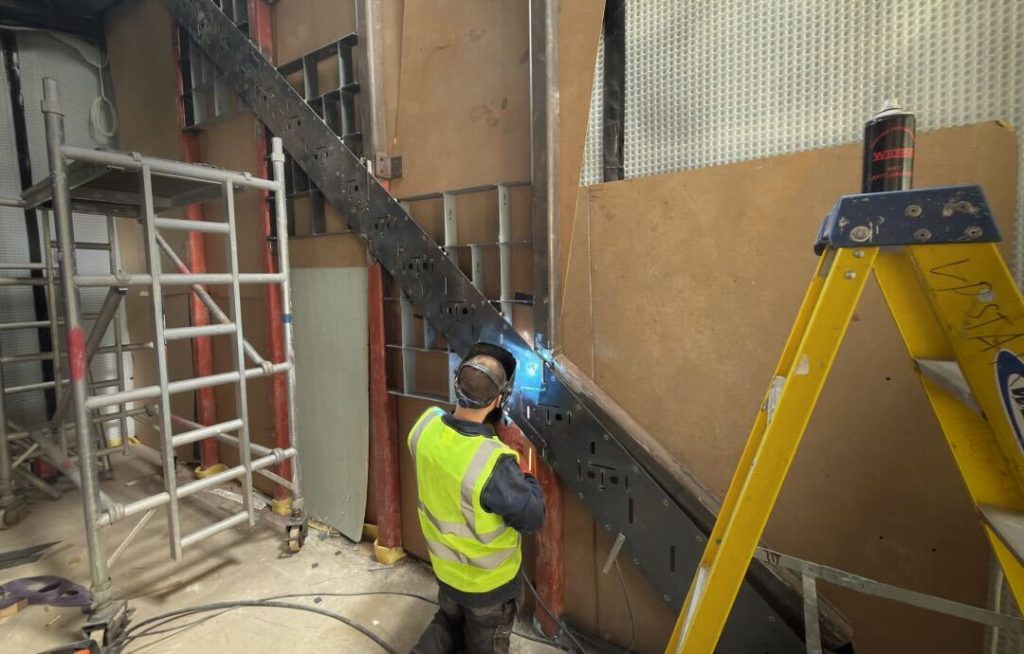
Preparatory work on site before installing a cantilever staircase

Before we agree on materials or look, we visit the site and check the wall. A cantilever stair needs a properly load-bearing wall, usually reinforced concrete or solid block at the back of a stud build-up. Plasterboard partitions will not do. We work with the client’s structural engineer, or bring in our own, to confirm the wall can take the moment loads transferred by each tread.

If the wall is not ready, we specify what it needs to become, including reinforcement layout, embedment depths, and fixing zones. This is exactly why early coordination matters, because every cantilever staircase must be planned around the wall construction and load requirements, and retrofitting that reinforcement later is painful and expensive. Get this right and the rest of the project becomes predictable.

2. Tread Fabrication and Anchoring

Installing steps for a cantilevered (floating) staircase

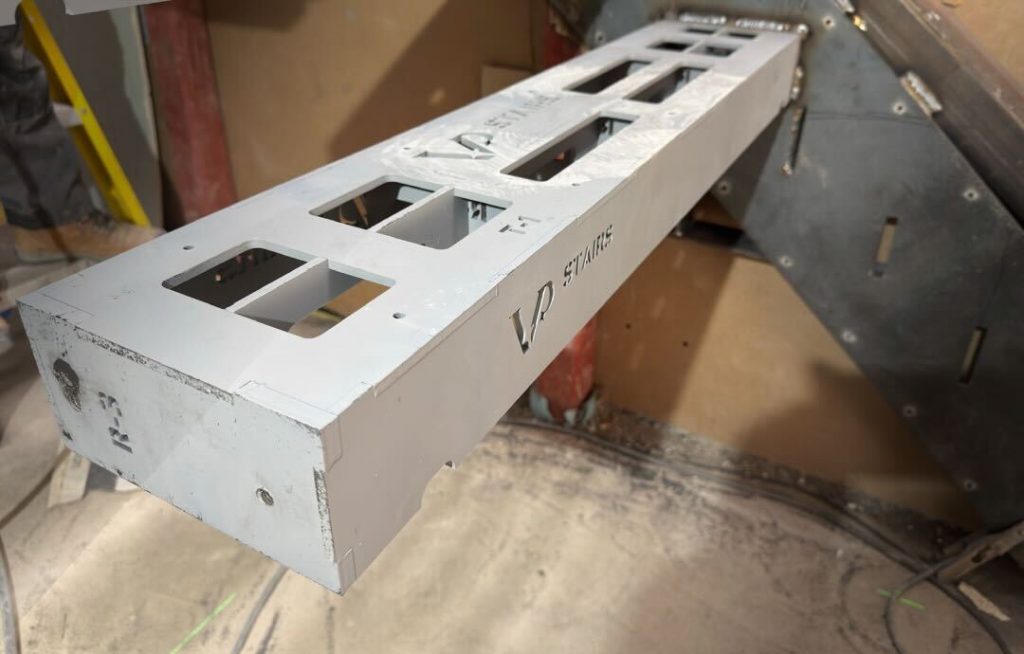
Once the wall is signed off, we move to the treads. Each one is built around a steel core, usually a flat bar or a square tube, that extends back into the wall as the anchor. The visible cladding (oak, walnut, stone, concrete) is built around that core in the workshop. Tolerances are tight, because a 2mm error at the wall becomes a noticeable dip at the nose of the tread.

The anchors are then resin-bonded or bolted into pre-formed pockets in the wall. Each tread is checked individually for level before the next one goes in. We never rush this stage. Once the wall is closed up and finished, fixing a wobbly tread is a much bigger job than it looks.

3. Balustrade and Finishing

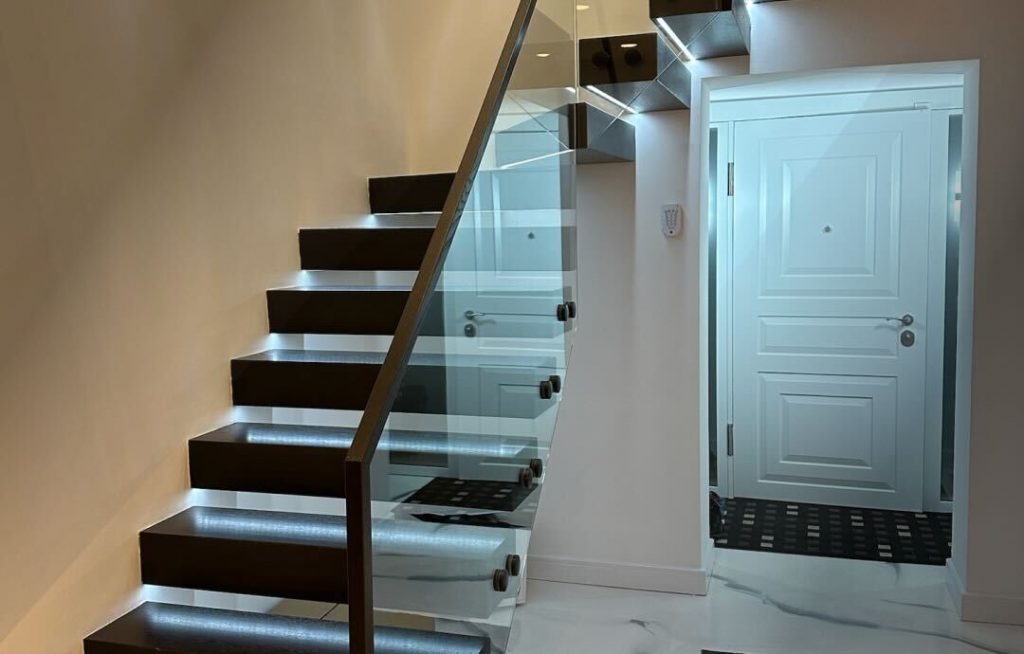
Finished cantilever staircase with glass balustrade

The balustrade is where most cantilever stairs earn their drama. Frameless glass is the most common request, because it preserves the floating effect by being almost invisible. We also do slim stainless steel rods, tensioned cables, or, on more traditional projects, no balustrade at all paired with a wall-mounted handrail.

UK building regs apply here in full, regardless of how minimal the design looks. The gap between balustrade elements cannot exceed 100mm (the child-safety rule), and the handrail height has to land between 900mm and 1000mm above pitch line. We design around those numbers from the start, not after the fact. If you want to read the exact wording, it is all in Approved Document K of the UK Building Regulations.

The Best Material Combinations for Cantilever Stairs

Not every material works on a cantilever! The tread has to be stiff enough to span without sagging, light enough to keep wall loads sensible, and stable enough to live with the wall’s own movement. After fifteen years of building these, three combinations consistently outperform everything else.

Materials Combination

Details

Solid oak treads with frameless glass balustrade

The classic. Oak is dense, dimensionally stable, and ages beautifully. Paired with 15mm toughened laminated glass, you get warmth on the foot and near-invisibility for the rail. Works in almost any interior, from period conversions to new builds.

Honed natural stone treads with a wall-mounted handrail

When the project leans architectural, think double-height entrance halls and gallery-style interiors, stone is hard to beat. We use limestone, basalt, or filled travertine, typically 50 to 60mm thick. There is no balustrade at all in the purest version, just a slim brass or bronze rail set into the wall.

Steel-cored treads clad in walnut, with tensioned cable balustrade

The most contemporary of the three. The steel core lets us push tread thickness down to around 40mm while keeping the cantilever span generous. Walnut cladding gives warmth, and cable runs read as fine horizontal lines without interrupting the sightline. 


If you want to dig deeper into how material choice drives the final result, our piece on premium staircase materials covers the wider picture.

Final Thoughts

A cantilever staircase is not the cheapest or simplest way to bring a floating look into a home. But…. when the structure is planned properly from the start, nothing else delivers the same architectural impact. If you are weighing one up for a current or upcoming project, book a free consultation with our design team and we will tell you honestly whether your wall and your brief are a good fit for it.