Effective Organisation of Space Under the Stairs. Insights, Examples and Practical Tips You Should Know
Who could forget the small cupboard under the stairs where Harry Potter spent his earliest years? Fiction aside, it points to something real. We mean…. this part of the home is often larger, deeper and more useful than people expect.

So why leave it as wasted under-stair space? With the right staircase design, the area below can become practical, elegant and fully integrated into the interior. In this guide, we have gathered the key ideas, design principles and under-stairs storage solutions worth considering from the very beginning!

Plan the Staircase and the Space Together

Taking into account the under-stairs space when installing the structure

An under-stair area being used is not likely to happen by accident. The staircase and the space below it should be designed to be one rather than two activities in most houses, to achieve the best effect. 

  • Shape matters. The staircase layout will determine the amount of usable space that you actually have and what will fit without any problem under it. 
  • Structure matters. Supports, stringers, centralising and repair locations influence the suitability of the area for drawers, shelves, under-stairs cupboards or open storerooms. 
  • Access matters. A generously sized void is not very helpful when the hole is so small or clumsy to use on a daily basis.

So, how does V.PSTAIRS act? When we approach a bespoke staircase, we always look at the full composition. That is what turns space under the stairs into something purposeful rather than an afterthought.

What Actually Makes Under-Stair Space Efficient?

Storage space is not the only aspect of efficient under-stair space. You should consider the naturalness of that space in everyday life, its ease of accessibility, and even its suitability to the overall interior. An intelligent solution is one that should not be forced. This is the reason why the shape of the staircase, the form behind it, the light in the staircase and the working boundaries of the room are all aspects that must be taken into consideration before the staircase is constructed!

1. Staircase Shape and Footprint Come First

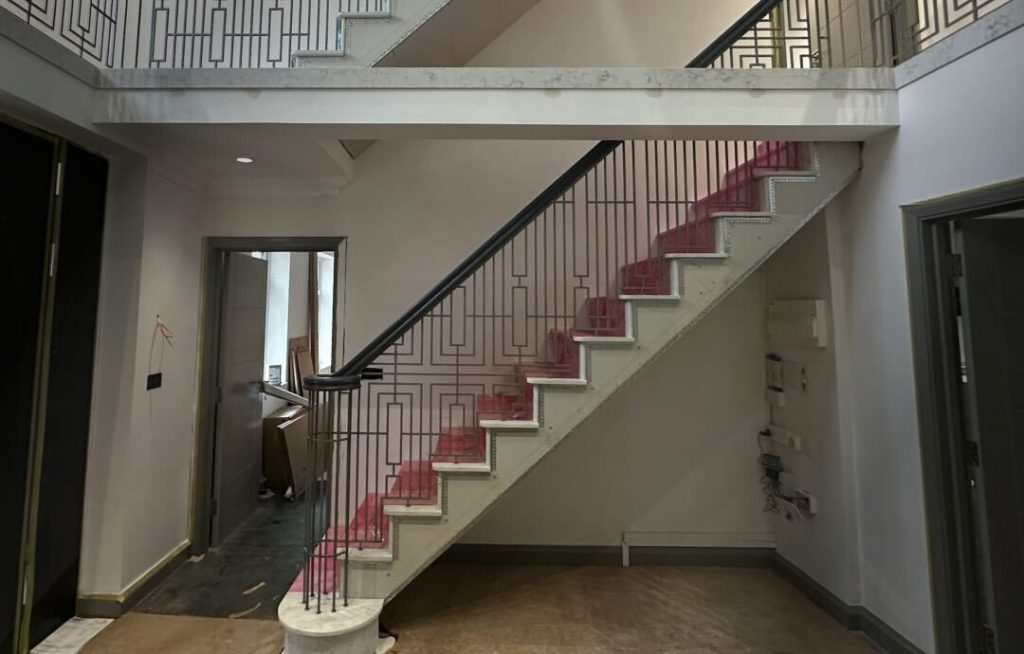
The stair shape and footprint are always the starting point. A straight staircase tends to make a lengthy, predictable area which is useful as understairs storage space, whereas the quarter-turn and U-shaped designs tend to form a disparate combination of height, depth and accessibility. In our portfolio you can explore a wide range of different staircase-shape projects!

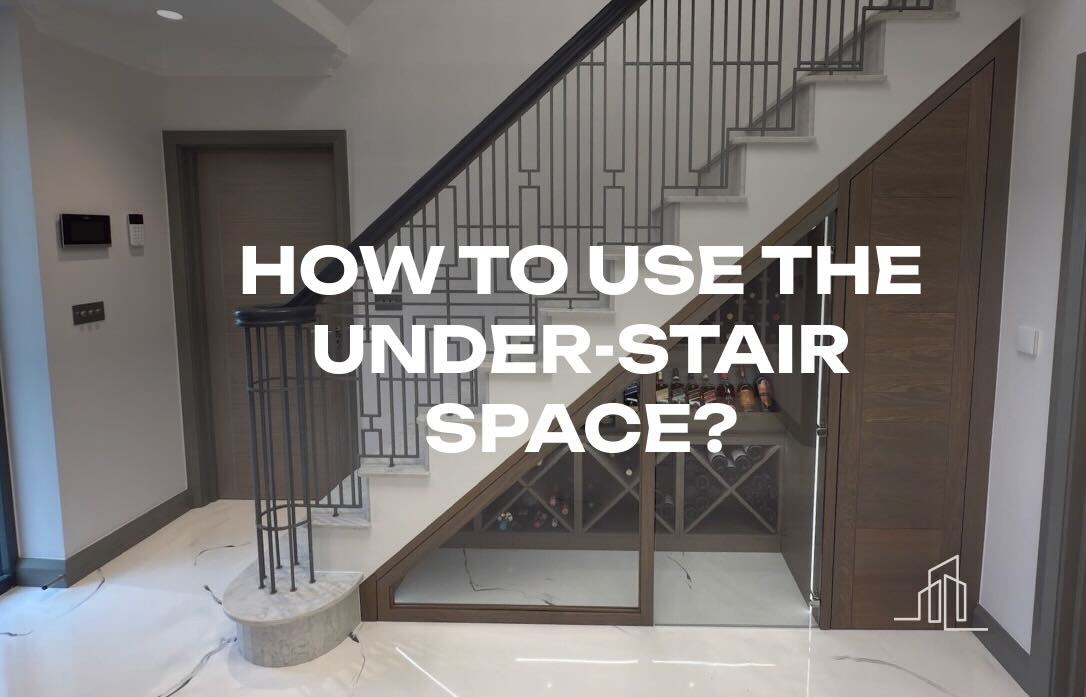
The Eastbourne staircase by V.PSTAIRS and its effectively used under-stair space with decorative design

Such a difference is bigger than many house owners think. Certain designs of staircases are designed in such a way that they can accommodate built-in storage, whereas others are designed to accommodate open shelving, display space or narrow hallway storage. The most attractive idea would be forced even in case the geometry was incorrect. With the geometry being right, the space starts to work practically without any effort.

2. The Structure Should Support the Function

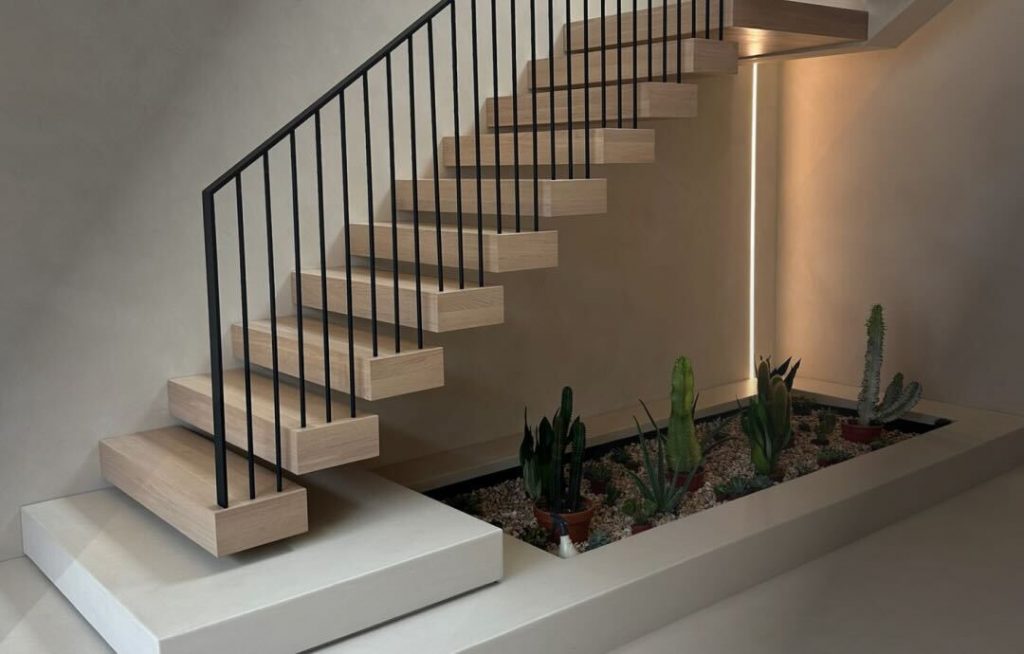
The staircase is also designed in such a way that it directly influences what one can construct beneath it. An old-fashioned stair with exposed stringers can demand one solution, and a floating staircase or a design with hidden steel can introduce completely different opportunities.

This is why storage should never be planned in isolation. If a client wants under-stair storage, cupboards or fitted shelving, the internal build-up has to support that function from the beginning. The cleaner the structure is resolved, the more seamless the final result feels.

3. Access Matters More Than Storage Volume

A big gap underneath the stairs might seem attractive on paper, but size does not make it realistic. The issue of people being able to access the space comfortably and be able to use it without frustration is the main bounty. Dark recesses tend to form dead places that store forgotten things. 

Access should be considered prior to storage volume because of this reason. Pull-out drawers are the most appropriate in certain houses. In other ones, front cupboards, open shelves or both are more effective. The under-stair storage must be conveniently opened and conveniently arranged. In case it is painful on a daily basis, it is not an effective solution.

4. Lighting, Visibility and Everyday Comfort

It is possible that even the well-thought-out storage will fail as long as the place is dark and crowded. The area underneath a staircase may be in a passage or interim area where there is minimal natural light, and therefore visibility is an actual part of the design. 

Incorporating staircase lighting, reduced finishes and open vistas can go a long way. They assist storage below the stairways to look cleaner, cooler and friendlier to use. This is particularly crucial in high-end homes whereby functionality cannot inflict damage on the overall appearance of the house. A good design does not merely conceal clutter but enhances the experience of moving through the house. 

5. Services and Practical Limits Should Be Planned Early

Realistic may depend on pipework, radiators, consumer units, metres, ventilation requirements and head height. These are facts that are not hard to ignore at the concept stage and hard to pay for later. 

This is the reason why practical limits must be considered at the initial stage of the staircase design. The size can be a compact one, utility niche or closed storage area, but it will be possible only in case the layout and services provide for it. When the constraints are known in the beginning, the end solution is much more refined. 

Discover more about staircase acceptance process in our complete guide here → https://vpstairs.com/what-to-know-about-staircase-project-acceptance-a-simple-handover-checklist-for-homeowners/ 

How the Space Can Be Used Once It Has Been Planned Properly

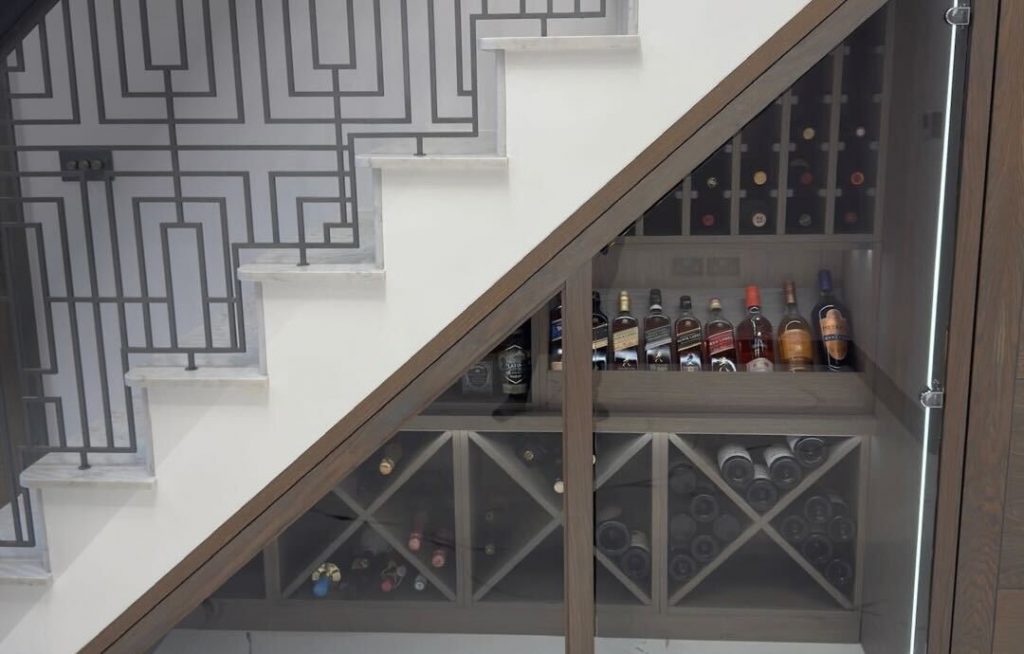
Using under-stairs space to install wine racks

Once the staircase and the space below it have been planned together, the area can serve far more than one purpose. Depending on the layout, it can become the following:

  • Everyday hallway storage for shoes, coats, bags and school items that need to stay close at hand but out of sight.
  • Closed built-in storage for cleaning products, luggage, seasonal décor and other household essentials that are better kept behind fitted doors.
  • A design feature such as shelving, display niches or under-stairs wine storage. We have completed projects where wine racks beneath the staircase became a striking focal point, adding character while making practical use of the available space.

You can decide for yourself how this space will serve you. For example, the most common mistake we see is that homeowners ignore this room and simply pile up unnecessary things there. However, with the right approach, it can become a unique design feature.

Making Every Inch Count

The best under-stair space never feels accidental. It works because the staircase layout, structure and intended use have been considered together from the outset, with every detail serving a clear purpose. When this is done well, the area feels like a natural extension of the interior rather than leftover space that had to be filled.

If you are planning a new staircase and want the area beneath it to be just as functional as the staircase itself, contact us to discuss a bespoke solution designed around your home. At V.PSTAIRS, we will help you create a staircase that looks exceptional and makes smarter use of the space around it!