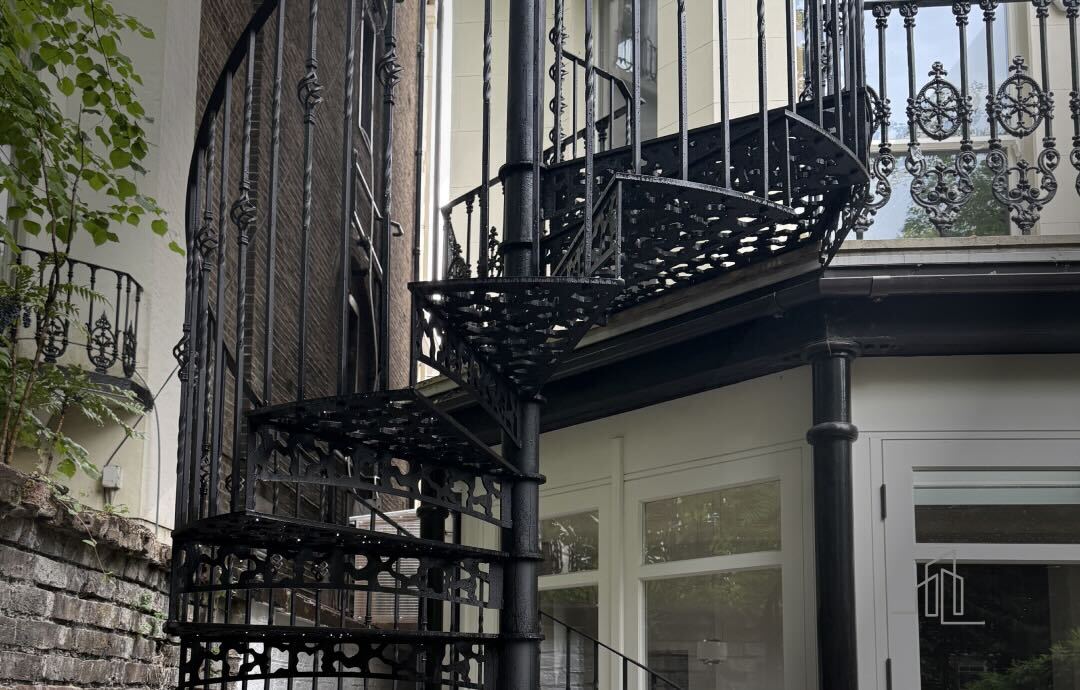
Factors to Consider When Planning an Outdoor Staircase
An outdoor staircase is never a simple means to get from A to Z. It is put into the exterior of the building, is exposed to the entire impact of the weather, and is worn in wet shoes, muddy feet, and with changing light during the day. This is why the thinking of indoor stairs cannot be applied to the outdoor staircases.
Considering an exterior staircase as an interior feature can be costly: slippery steps, an awkward approach, premature corrosion, or premature fixings. So, a well-thought-out design at the beginning will save you the cost of later changes. It will provide the completed staircase with a natural feel to use, aesthetically blend with the building, and withstand the outdoor environment throughout the year- an important consideration in an outdoor garden staircase in the UK.
Why Details Matter?
It’s no secret that outside, small choices quickly turn into big consequences. A few centimetres in clearance, the wrong tread design, or an unsuitable finish can affect safety, comfort, and maintenance for years. We gathered all key reasons outdoor staircase details matter:
- Weather exposure and moisture are constant factors.
- Space restrictions are common in gardens and side returns.
- Safety requirements are stricter when surfaces get wet.
- Fixings and coatings must resist corrosion long-term.
When these points are considered early, the staircase becomes an asset rather than a future problem. The goal is a structure that stays dependable, feels secure underfoot, and continues to look intentional as the surrounding garden and exterior finishes evolve (whether it’s a small terrace access or an outdoor helical staircase UK solution). This is also why clients often look for experienced teams such as leading staircase builders in London, who are used to tight sites and demanding exterior conditions.
What to Pay Attention To Before You Build (Checklist)?
As you may have already understood, outdoor staircases differ from indoor ones in several important ways. These differences will form a list of factors that you should consider before making your final decision. Below, we have prepared a short checklist of five factors that you should pay attention to before building an outdoor staircase!
1. Measure Space, Clearances, and Entry/Exit Points
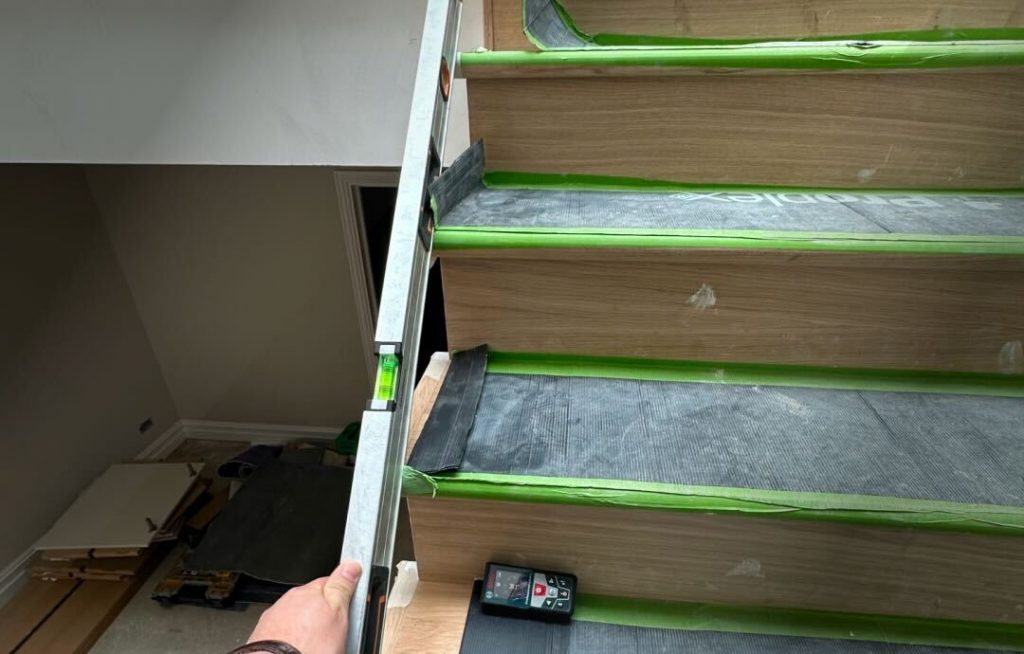
Begin by mapping not only the footprint of walking. As a compromise maxim, have at least 8001000 mm of clear way on the approach that it is comfortable to walk on, and not to put the first step in such a way that it makes a narrow turn out of a doorway. Assuming that there is an outward-opening door in the vicinity, leave adequate space such that the door does not swing into the stair line.
On the top and bottom, prepare a pause zone instead of an immediate step. The reasonable ground level is about 600-900 mm of clear landing space to enable individuals to comfortably move on/off the staircase with goods. Lastly, make sure the cheque vertical and side clearances to walls, windows, gutters, and any future decking or pavement level are provided.
2. Choose the Right Stair Type for the Site
Choose the stair type not only by its aesthetics but also by its movement and space. Straight flights are the most intuitive types to use, and more run length is required. In tight gardens or side returns, a quarter-turn or half-turn design can minimise the area and still maintain a natural type of walking rhythm.
Helical stairs frequently have to be the answer to the question of having to maintain the footprint tight, but they can be comfortable only if the geometry is designed correctly. The way to test this is to measure the walking line: most human beings will step two-thirds of the distance between the centre post and the edge. You also need to consider what you are going to carry: plants, chairs, bins, etc. So, a spiral might require a larger diameter circle or even a different plan altogether, in case you deal with very bulky stuff on a regular basis.
3. Drainage and Water Management
The most practical step surfaces are those that don’t “hold” water. Openwork or perforated treads help because they allow rain and debris to pass through rather than pooling. If you’re using solid treads, you’ll need a deliberate anti-slip strategy and more frequent cleaning. Also think beyond the treads. Where will the water go at the bottom of the staircase? If the base sits over paving or decking, you can unintentionally create a wet patch right where people step off.
4. Handrails, Guarding, and Everyday Safety
A staircase can be structurally sound and still feel unsafe if the handrail isn’t right. In practice, people rely on a rail most when conditions are worst (wet steps, low light, rushing out). For comfort, the handrail should be easy to grip and feel continuous in the hand, especially on a helical staircase where the rail guides the body through the turn.
5. Material Choice and Corrosion Strategy
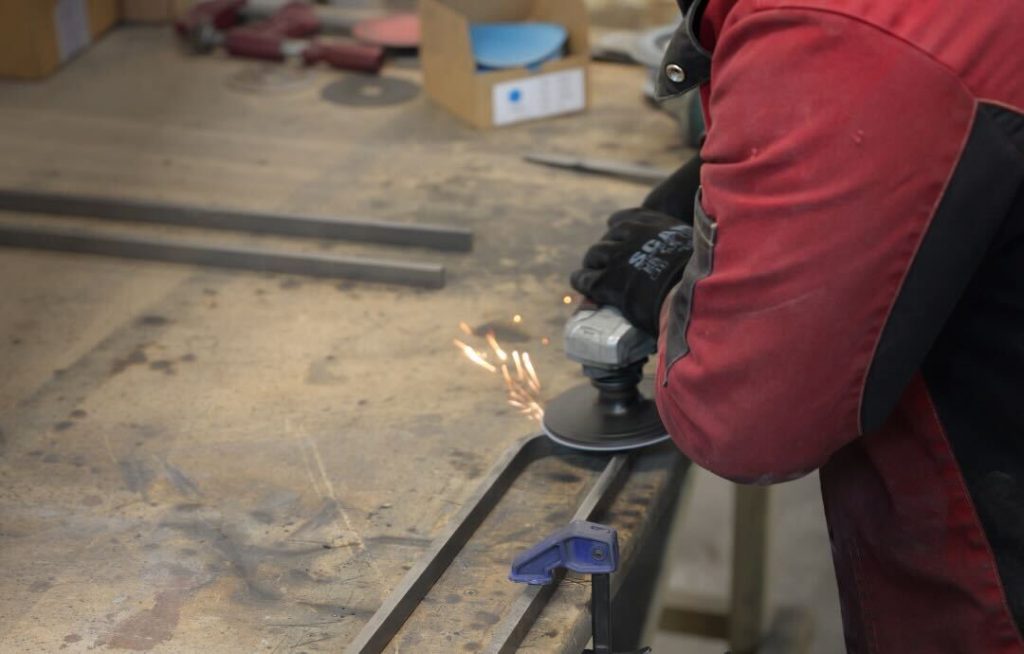
The outdoor staircases can either become a headache after a while or a choice of materials. Comparing the staircase materials, consider how each of them would behave in real life: rain, changes in temperature and the unavoidable knocks and scratches. Steel is used due to the fact that it allows creating accurate, powerful buildings and on the other hand, allows compact solutions; however, it should be insulated at the very beginning.
Explore Outdoor Staircase Real Example
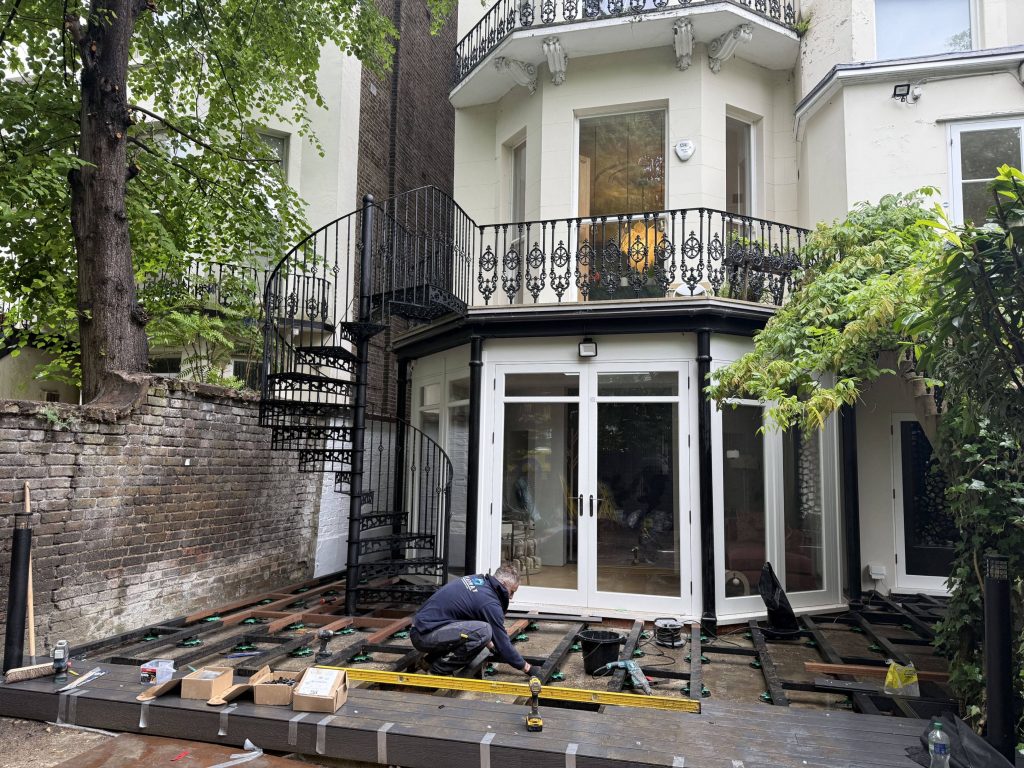
Undoubtedly, the best solution is to look at a real example to see how good outdoor staircases can look in the UK. Fortunately, at V.PSTAIRS, we have recently completed another project that we would like to share with you. You can find dozens of interesting staircases in our portfolio, but the Luton project is special in its own way. This is a bespoke outdoor helical steel staircase designed for a private residence where the client needed compact access from the garden level up to a terrace. Here are the key features of the Ealing staircase:
- All-steel construction for strength and year-round outdoor use
- Laser-cut openwork treads to support drainage and reduce standing water
- Matte black painted finish to match existing wrought-iron style railings
- Two-layer primer preparation before the final durable coating
From consultation through surveys, fabrication, surface treatment, and installation, the project was coordinated carefully alongside other garden works. The end result is a staircase that functions as a practical access point while also acting as a visual centrepiece.
Want to know more about this staircase? Explore the Ealing project to discover the entire journey from planning to final installation on the project → https://vpstairs.com/portfolio-item/ealing-helical-garden-staircase/
Wrapping Up
An outdoor staircase will be planned based on the basics being correct, before any structure is erected. Such factors, when put into place early, save you the rework, which is very expensive, and a staircase is acquired which is safe and comfortable, and matches the look of the property well over the years. Should you be thinking about an external staircase, a small spiral system or a more extensive access design to the garden, you can contact V.PSTAIRS at any convenient time without charge or obligation to experience a consultation. We will assist you in evaluating your space, negotiating on what will be the most effective and transforming the idea into a long-lasting product!
2 Comments
-
Thomas Bradley
glad you mentioned landing space at the top and bottom. cramped outdoor stairs are a nightmare in real life, even when they look fine on a drawing.

Comments are closed.


Lucy Meredith
Outdoor stairs are always judged on looks first, but the real difference is whether they still feel safe in November when everything’s wet.