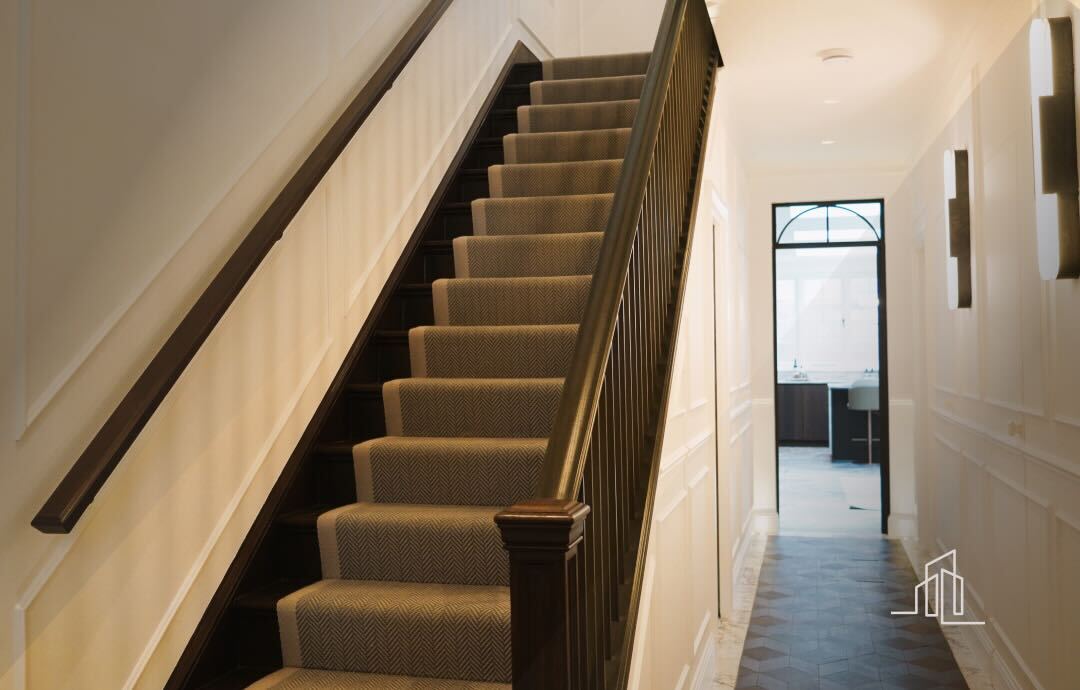
Oak vs. Ash – Which to Choose for a Modern Staircase?
Have you ever wondered how safe staircases are? The truth is, safety, like functionality and aesthetics, depends on a lot of things. One of them is the materials used to make the staircase. It is not worth saving on materials and choosing cheap alternatives, as this can lead to risks. For example, statistics on falls from stairs show that around 40% of Britons fall from stairs every year.
Some popular options include oak and ash. At first glance, they may seem very similar, and it may seem like there is no difference between them. However, there are many differences between them that may influence your choice. In this article, we want to provide a detailed comparison of oak and ash so that you can choose the best option for your future staircase!
Why Are Wooden Materials a Common Choice for Stairs?
Timber brings warmth, tactility and design flexibility to circulation spaces that metal or concrete rarely match. It can be machined into crisp modern profiles, softened into sweeping curves, or left with subtle grain for natural character. For homeowners, timber’s repairability is a major draw: treads can be refinished rather than replaced. For builders, the material is predictable, widely available and works well with other finishes such as plaster, glass and steel balustrades.
- High strength-to-weight ratio for slim, elegant sections.
- Quiet underfoot compared with steel or stone.
- Easy to machine, join and detail on site.
- Accepts stains, oils and lacquers for varied aesthetics.
- Warm touch and sound absorption improve comfort.
- Renewable resource when responsibly sourced.
In modern interiors, wooden staircase materials help bridge hard surfaces and sharp lines with a calmer, human feel. It also allows consistent language across flooring, doors and furniture, which keeps a minimalist scheme cohesive. Whether showcased as a centrepiece or pared back to near-invisible stringers and treads, timber delivers performance with long-term serviceability.
Learn more about the best types of wood for staircases here → https://vpstairs.com/best-types-of-wood-for-staircases-personal-experience-of-v-pstairs/
A Brief Overview of Oak and Its Use in Stairs
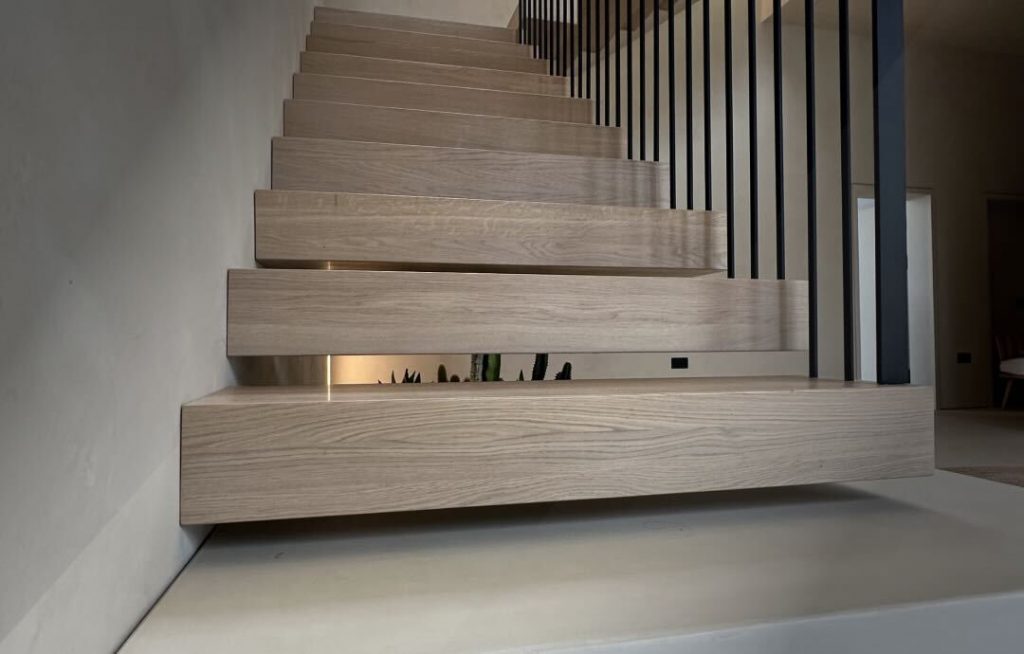
Oak is the benchmark hardwood for staircase construction. Why is it so? It offers excellent durability, high surface hardness and a grain that reads as premium without being overly busy. For example, British oak in particular has a stable, straight grain with light to mid-brown tones that sit comfortably in contemporary schemes. It machines cleanly, holds fixings well and responds predictably to modern finishes, from clear matt oils to deep stains.
For staircases, oak’s density resists denting on leading edges of treads and landings, while its stiffness limits bounce on long runs. The open grain provides subtle texture that hides minor wear between maintenance cycles. Oak also pairs elegantly with blackened steel, brushed brass and glass, making it a safe choice when other materials are already specified.
Consider that oak is comparatively heavy and can be costlier than many species. Its tannins may react with iron, so stainless fixings or proper sealing are advisable. With responsible sourcing, oak offers a long-lived, refinishable staircase that reads timeless rather than rustic. It’s ideal for modern homes seeking understated luxury.
A Brief Overview of Ash and Its Use in Stairs
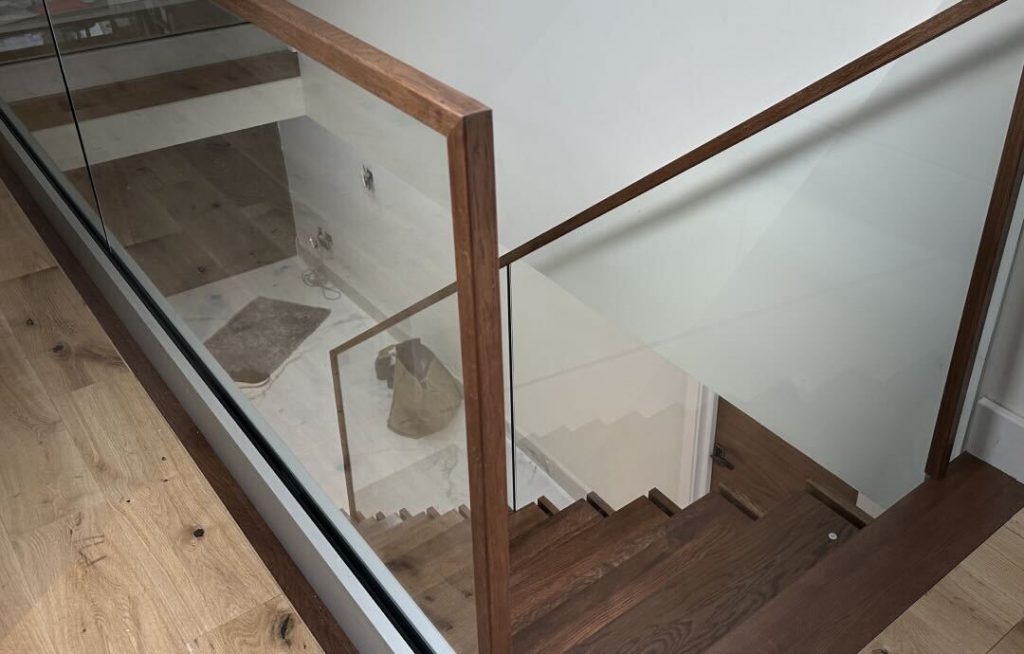
Ash is a tough, resilient hardwood prized for its elasticity and pale, creamy colour. It has a pronounced, straight grain that feels contemporary and lively, especially in lighter interiors. In workshop terms, ash machines beautifully, bends well for laminated strings or helical elements, and takes stains evenly. So, it can be finished to resemble anything from Scandinavian blond to deeper tones without blotching.
In staircase applications, ash’s combination of toughness and shock resistance performs well on busy treads and risers, offering a firm, springy feel underfoot. Its lighter base colour helps small or shaded stairwells read brighter and more open. Because ash accepts pigments readily, designers can fine-tune tone to match floors or joinery for a seamless, modern palette.
What else to note? Ash is slightly less hard on the surface than oak, so leading edges benefit from robust finishes or protective nosings in high-traffic households. The pronounced grain is part of its charm but will show more contrast with dark stains. As with any hardwood, specify kiln-dried, well-graded stock and responsible sourcing. Chosen thoughtfully, ash delivers a crisp, contemporary staircase with excellent value and visual lightness.
The Final Choice
So, how to choose between these two options? Consider the most important factors for you. They may differ for each person. For example, if the most decisive factor for you is the cost of the material, then you should give preference to ash, as it will cost 10-15% less. If you want darker shades, then you should give preference to oak.
In fact, it is best to make a chart with a checklist if you find it difficult to make the final choice. The option that scores the most points (advantages) deserves to be your choice. On the other hand, you should not limit yourself to these materials alone. You can use a combined design that mixes wood, glass and metal.
Want to know the disadvantages of ash, oak and other wood materials? Explore our material on common problems with wooden staircases at this link → https://vpstairs.com/common-problems-in-the-operation-of-wooden-staircases/
V.PSTAIRS – Precision and Quality in Any Material
Regardless of the materials and type of construction you choose, you need to find a reliable partner for staircase construction. At V.PSTAIRS, we adhere to high-quality standards, following relevant building regulations for staircases in the UK. We offer a wide range of materials so that you can choose the most suitable option for you. For example, when choosing between oak and ash for your staircase, consider your budget, the overall design of the room and your desired colour scheme. If you have any ideas for your future project, please contact us:
- By email: hello@vpstairs.com
- By telephone: +44 7418 315550
- By submitting a request on our website
We will get back to you as soon as possible to arrange a free consultation. During the consultation, we will understand your ideas, explain the key points and select the best solution for you. Every staircase from V.PSTAIRS is a custom solution that cannot be found anywhere else!
2 Comments
-
Priya Shah
Love the suggestion of combining wood with metal/glass. We want warmth without making the hallway feel heavy!

Comments are closed.

James Whitfield
Pinterest makes them look identical. The colour/grain differences in real life are bigger than I thought.