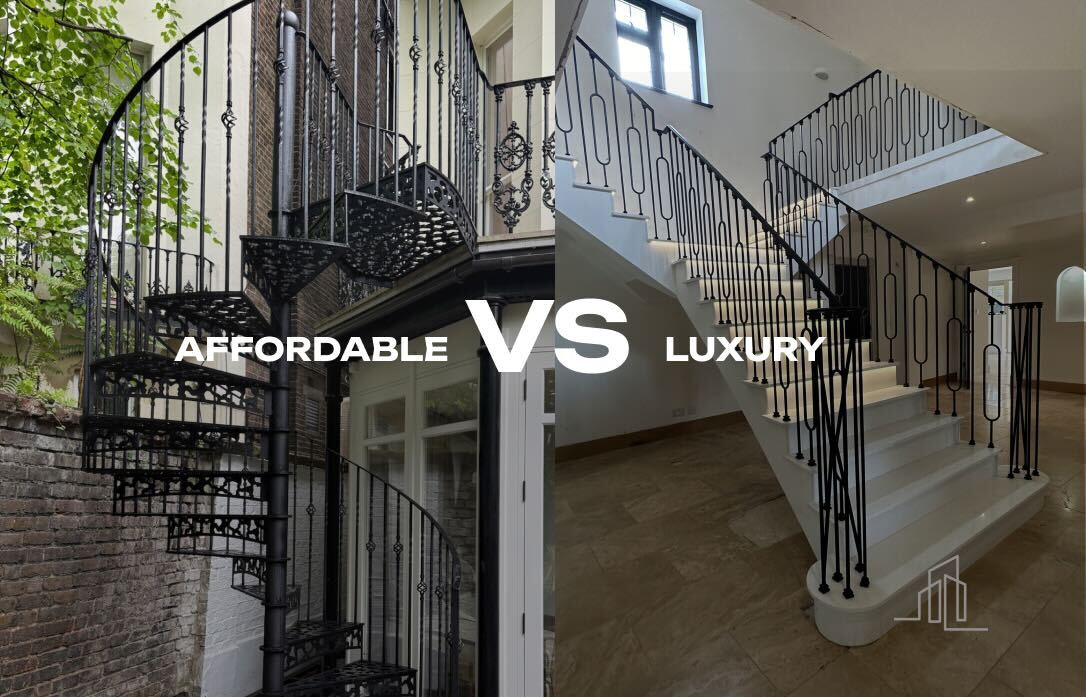
Comparison of Affordable and Luxury Metal Frame Staircases
A metal frame staircase has a bit of an unfair reputation in the UK. People hear steel and assume it’s too expensive. The metal frame is, in fact, only the base. What you add to the frame will determine whether the final outcome seems feasible and cost-effective, or like a legitimate centrepiece.
Here in this guide, we are going to make it slow and real. You will find out what affordable people mean without becoming an owner of something that looks like cheap stuff, what drives the steel frame staircase towards the luxury road, and which way makes sense in your house!
One Base and Two Price Realities
The same basic metal frame can be used on two staircases, but they appear to belong in entirely different houses and hence the variation in price. When it is designed, made and fitted, you can adorn it with various staircase materials (treads, finishes, balustrades, lighting and more) to either fit a reasonable budget or to make a statement staircase that takes the stage.
What Does Affordable Really Mean?
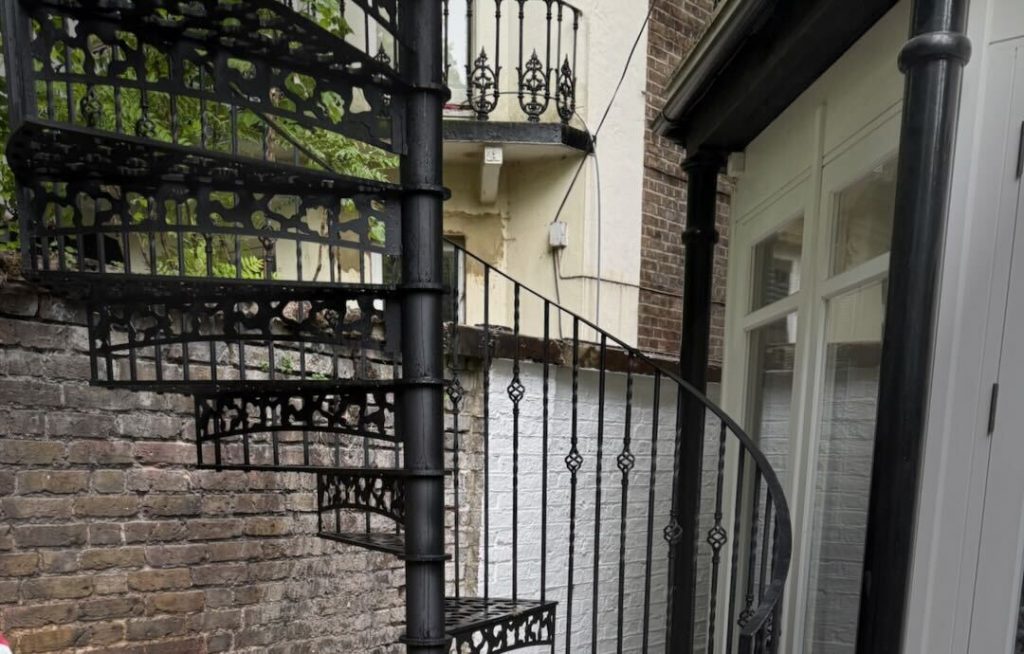
An affordable metal frame staircase isn’t about cutting corners. It’s about making smart choices that keep the build straightforward. The best budget-friendly staircases usually focus on clean geometry, dependable finishes, and practical details that do the job day in, day out. So, what typically keeps the cost under control?
- Simpler layout.
- Practical finishes on the steel (durable, easy to maintain).
- Sensible tread choices that suit the space without over-specifying.
- Straightforward handrails that meet safety needs without becoming a design project.
The key is balance! We mean you can absolutely keep things affordable and still make it look sharp. A well-proportioned frame with tidy fabrication and a cohesive finish will always read quality (even if the spec is deliberately minimal).
What Makes a Metal Frame Staircase Luxury?
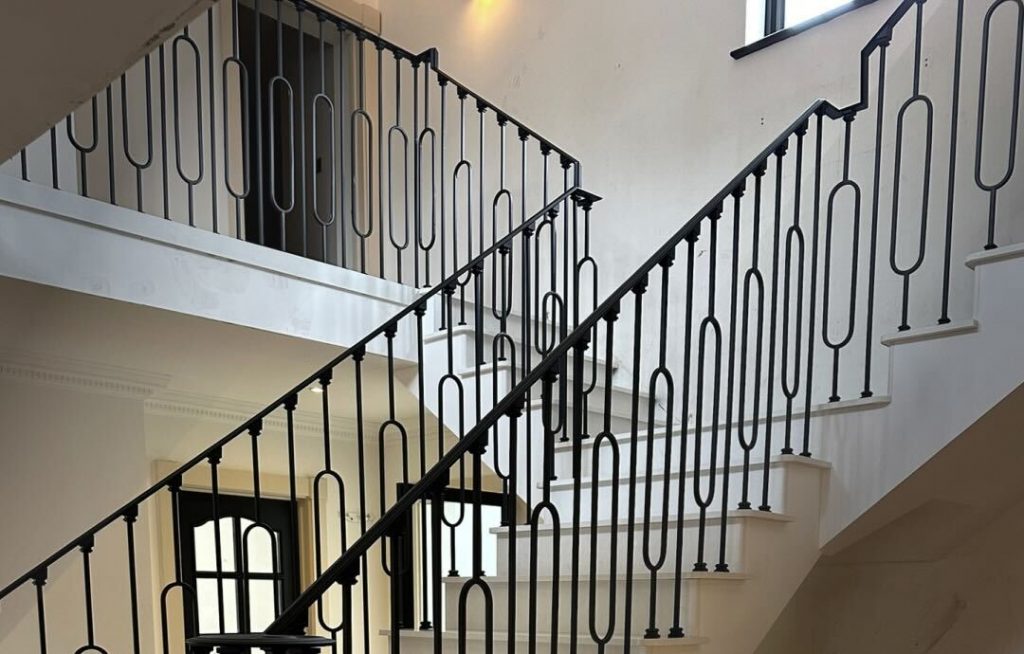
Luxury in a metal frame staircase is imposed. The staircase is not a path between floors, but a part of the building. That generally implies custom proportions, more luxurious materials, increased finishing, and details, which cost more time to design, make, and fit correctly. What usually drives a staircase down to the luxury end:
- Custom geometry (feature landings, wider flights, complicated layouts).
- Balustrades (made of glass, custom-made metalwork, or a combination of materials) are designed first.
- Inbuilt lighting (considered wiring paths, concealed paths, smooth finishes).
- Increased finish level on steelwork.
It is in the details that people see on a daily basis: the sensation of the handrail, the way the light falls on the edges, the way the stair fits in the space. A luxury staircase must appear to be simple, despite the fact that the effort involved behind the scenes is far from it.
Real Project Studies Made by V.PSTAIRS
Without a doubt, real-life examples are the best way to understand the subject. You’ve come to the right place, as the V.PSTAIRS portfolio features dozens of different staircase projects across the UK. We create both affordable and luxurious solutions for houses, flats, gardens and commercial premises. Below, we would like to introduce you to two of our metal frame staircases, which differ significantly in their design, cost and complexity!
1. Ealing Project (Affordable Build)
Ealing project is a good example of how an outdoor metal frame staircase can stay genuinely budget-friendly without looking cheap. The brief was simple: create safe access in a tight garden setting, with fixing points and clearances worked out properly so the staircase sits neatly against the façade and the existing layout. The full run (survey → design approval → structural checks → fabrication → surface treatment → install) landed at roughly 10 weeks, with installation coordinated alongside other garden works.
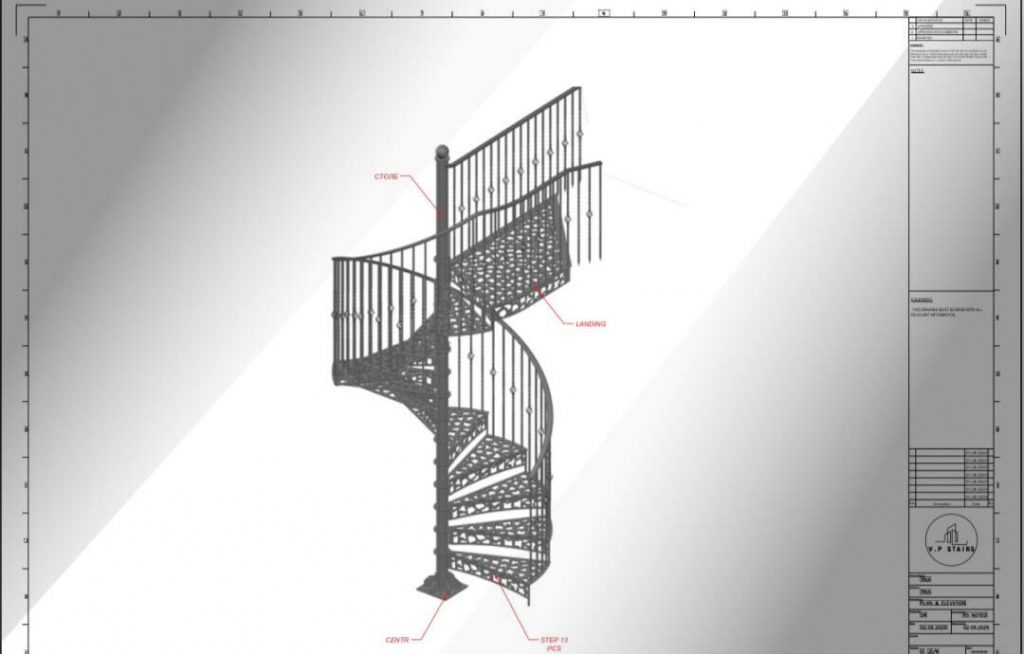
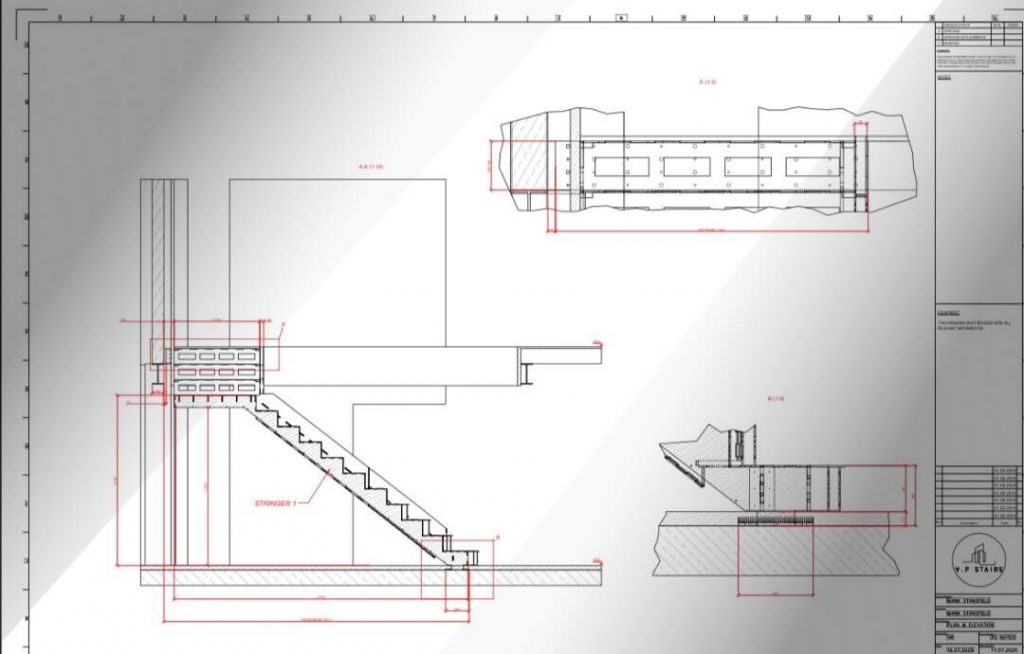
From the drawings, you can see a compact helical set-up built around a central post, using 13 steps plus a landing and repeated step geometry (the module is set out in 60° increments). The total FFL-to-FFL height is 2952mm (just under 3m), which is a very “normal” height for a practical external connection between levels.
Explore the Ealing project in detail at this link → https://vpstairs.com/portfolio-item/ealing-helical-garden-staircase/
2. Peterborough Project (Luxury Build)
Peterborough is the opposite end of the spectrum. A bespoke T-shaped staircase designed as a statement feature for a private home. The project description is very clear on the “why it costs more”. It’s not only steelwork, but it’s also white marble, custom balustrades, and smart LED integration, all working together as one system. The full project ran for around 8 weeks of specialist work, and the staircase footprint is listed at 30m², which already indicates it’s a large, centrepiece build rather than a simple connector.
On the technical side, the steel is doing serious work here: a load-bearing steel spine engineered to support up to 250kg per tread, then finished with carefully selected and polished marble, a black metal balustrade, and a lighting system that reacts to movement on the stairs.
Discover more about Peterborough staircases in our portfolio → https://vpstairs.com/portfolio-item/peterborough/
5 Questions to Make the Right Decision
- Is your staircase meant to blend in or be a feature? If it’s purely functional, keep the spec clean and practical. If it’s a focal point (entrance hall, open-plan space), design-led choices usually make sense.
- Indoor or outdoor, and what does that mean for finishes? External staircases need the right protection and grip underfoot. Indoors, you can prioritise look and feel.
- What will you notice every day? Most people feel the difference in treads, handrails and lighting. They rarely care about “extra” complexity that doesn’t change the experience.
- Do you want lighting now, or might you regret skipping it? If you might want LEDs later, plan for it early. Retrofits can be done, but they’re rarely as neat (or as cost-effective).
- What’s the reality of access and installation? Tight hallways, awkward openings and limited access can add time and complexity. A smart design works with the building, not against it.
Wrapping Up
The staircase is made of a metal frame and is not necessarily cheap or expensive (it is adjustable). Provided you want something practical and pleasing to the eye, then you can have the spec remain slim and still have something considerable, clean and robust. If you prefer a centrepiece, the same steel base can be upgraded with high-quality staircase materials, custom-made balustrades, and built-in lighting.
If you are unsure which direction best suits your home (or you just want a couple of options, one above the other), contact us. V.PSTAIRS is also free to consult with our professionals. We will discuss your space, your style, and your budget, and then provide the most reasonable specifications for your project within the UK.
2 Comments
-
Amelia Foster
the bit about deciding whether the staircase should blend in or stand out was probably the most useful part for me. That one choice really does affect everything else….

Comments are closed.

Harry Collins
I liked the examples in this article because it’s easier to understand price differences when you can actually picture the finished staircase. The lighting and glass details definitely seem like the kind of things that push a project into the premium category.